As many of you know, I am no longer teaching. Neither time nor patience have seemed to be on my side these days. When I began to find myself challenged by students and their lack of cultural sensitivity and adaptability and flummoxed at the school’s administrative ineptitude I knew it was time to fade quietly into academic obscurity.
An aside–Above I posted “former” professor rather than “ex” as I learned long ago from Marine Corps compatriots that dangerous work, like teaching and soldiering, entitles you to wear a hard-won title as a sort of combat campaign ribbon. But, I digress…
No teacher in China should expect a student to “get” western classrooms expectations without a great deal of hand-holding and diligence. They live for exams, they live to graduate–for their parents– into a job with a brand name company and beyond that most are lost-balls in the high weeds of massive educational industrialization in China: most don’t know how to extricate themselves from doubt, confusion or peril even up to the last year they are in college. Not long ago I signed 17 letters of recommendation for one student looking at four disparate graduate disciplines–all of them motivated by hope of parental approval and not personal passion. And for those who do not continue on in academics after they graduate and can actually find work in a tightening labor market they get slowly mentored into new positions and not expected to take the proverbial “bull by the horns” as are we in the west. The consequences–frustration, anxiety, anger, ennui– of demanding rapid acculturation from a Chinese student is the product of teacher, not learner, error.
To think that a Chinese student will ever behave as a western student does, even if they are the best of your classroom mimes or curiosity seekers, is to believe that the 10 people who have been waiting 30 minutes less than you for a cab will not push you to the curb to get to one first. In a society of growing economic disparity, most Chinese are fully aware that getting to the top means getting anywhere first regardless of the human response cost to themselves or others. Politeness will not feed a family.
Chinese students lack respect for most foreign teachers because they have often been fed a steady diet of has-beens, wanna-be teachers and unqualified nomads. This brand of “foreign expert” has a disdain for the trials associated with life in a 5,000 year old country whose culture and adornments ostensibly are modern, but are still exponentially lagging 150 years behind world newcomer, America. It is easy to be fooled into believing that some things are the same here. They are not. And for the record, before I get lumped in with the CNN Caffertys of this world, I don’t think the west has a monopoly on the right way to teach or learn. It is just different here and accepting a job to teach will first demand acclimation and accommodation by the educator, NOT the educator’s charges.
You will pay for the sins of your predecessors-as mentioned above. And because students, as well as Chinese colleagues, have only a cursory knowledge of western classroom etiquette(and because most of them couldn’t care less about their students)Â they cannot be blamed by you for doing as they have always done before “the foreigner” arrived. If you were an awe inspiring lecturer in America you need to get over yourself here: the best of your students caught half of your idiomatic speech and another 25% didn’t think it would help them pass the GMAT so they began phone-texting their friends the second you opened your mouth.
To expect an administration to be “enlightened” solely because they have English language skills is a monstrous mistake. Chinese academic office workers are underpaid, overworked, subject to two governances (party and school leaders) and swamped by the sheer volume of work that the rapid industrialization of education has brought with it. It is a safe bet the foreign affairs/personnel office won’t consider the needs of a transient educator as very high on the priority list and you are way too full of yourself if you expect or demand otherwise.
Teaching can be a repetitive/redundant in the most progressive of institutions. In China, where foreigners are usually relegated to more mundane subjects, like oral English practice with no syllabi and no funds for material or course development, habit can be, as said by Godot,”a great deadener.
I will always consider teaching the highest of callings and a vocational choice carrying with it the monstrous obligations and the power to positively or negatively alter the course of a life forever. So, a responsible teacher, and I have tried to be one, should know when to say goodbye so as to not do damage when tired or disillusioned. I am a bit of both.
I will be reprinting a few of my more positive experiences from the chalkboard jungle from time to time. Here is one from exactly a year ago that I will never forget. It was originally entitled ‘After the Applause”:
I finished a class this week and there was applause. The general reticence of Chinese learners to be demonstrative in the classroom had me thinking that their sudden outburst was merely because the period had finally come to an end. Caught off guard, with tears in my eyes, I lowered my head and really tried to understand what had brought on such a response.
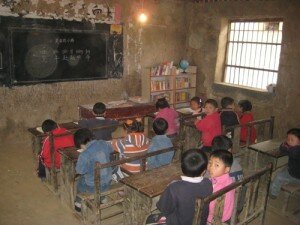
The class had been a simple one: an exercise that had them speaking about themselves, the origins of their families and the meanings inherent in the elegant pictographs, the Chinese characters that represent their names. They chalked each one on the board and told stories of the history, hope and love that had gone into the name choices made for them, by whom the names had been given and why they had received them.
Let me digress back a week and tell you of an encounter I had with one of the Chinese nationals teaching at our school: She wandered into a conversation I was having with two other Chinese professors and introduced herself with an English name I knew could not be hers by heritage. I then asked, as I always do, her “real” name in Chinese. She replied that it was much too difficult for a foreigner. I asked again and she answered with a simple name, nearly as common in China as is Smith or Jones in America. I was not sure if I should be angry, saddened, pedagogical or silent at that moment. after some thought, I simply drew the character for her name in the air and then asked if I was correct. She confirmed my choice and left the conversation after quickly instructing me, thereby saving face, that Chinese names were richer in meaning and more carefully chosen than were western ones. My three daughters Alizon (named for the beautiful lover in the verse play The Lady’s not for Burning), Adrienne (named for famed feminist poet Adrienne Rich) and Chieko (My “Thousand Blessings Child” nearly lost to a prenatal condition) might disagree, but I nodded acceptance and went back to small talk with my colleagues.
It was later that day that I conceived the teaching lesson I mention above. And I conceded that it was often true that Chinese families incorporated, on the whole, more thought and care when choosing a name: superstition, family placement, traditions concerning who in the family should normally name a new child, hopes associated with the birth of the child (sometimes even questionable ones like giving the girl a boy’s name because they had petitioned the Tao for a male child), Feng Shui master’s recommendations and dozens of other factors that never enter into our decisions in America. I thought that she had made actually made a great case for students (and herself) not using English names. I wanted students to know that some of us are really hungry to know more about Chinese culture and willing to endure being uncomfortable with the ensuing difficulties of language acquisition. And I wanted to re-instill a sense of identity and connection with their own culture that I dreaded they could lose if they abandoned their uniqueness because of a fear of not fitting in.
Many foreign teachers, for convenience, give or accept English names from the foreign charges in their classes. They allow students to abandon the most beautiful written language on earth and deny their heritage by replacing their names with handles like “Flash,” Zinger,” Caca,” and “Bush” and “Bin Laden” (the latter incidentally are really friends)….Some students have perfectly reasonable names and, for whatever reason, ask to be called by the same. In those cases I obey their requests.
Some teachers make the case that they give English names as part of practice in cultural education. I remember a similar technique was used in German classes I attended while living in Frankfurt. The difference was/is the English names here usually stick with the students for decades, sometimes even life. Conversely, I can remember many a foreign teacher in Japan expressing feelings of anger about having their name transliterated into an inadequate and odd sounding phonetic alphabet. Many teachers thought the practice was racist and that the Japanese should learn to correctly pronounce their names.. But, I have rarely heard an ESL teacher take the opposing stance when it comes to foreign student titles.
How can we ever translate the stories of five thousand years written on their faces, hear their fragile voices chime with the long-traveled love of ancestors, or walk down the aisles of the dialectic between us without even knowing their real names?
I had dinner the following day with a British teacher who told me that a wise lecturer of his had once added this question to a final exam: “What is the name of the person who cleans this room for you every day?” Some thought it a joke while others saw it as a call to find learning in the commonplace–that upon examination becomes extraordinary. I don’t know how that teacher graded this lesson, but I know the best answer I could have received would have been: “I don’t know, but I will find out.” I know very few foreign teachers in China who know, or care to know, the names of their students.
Some of greatest lessons in life and my deepest understanding of any culture has come from taxi drivers, and hospital orderlies–real stories for another post. These kinds of awakenings have been more commonplace than revelations gained through discourse with supervisors or professional pedants. And too they have come from students, like mine this week, with the onomatopoeia of temple bells (”Lin Lin”), the warmth of summer sun or the synestheia-like fragrance of jade in their names. Why wouldn’t I want to hear what ancestors wished for them instead of some silly nickname foisted on them or adopted by themselves because of some misunderstanding of a western movie or TV show? Some common name, adopted by Chinese in the early days of the “opening up” here. was “Marlboro” or “Winston.”
One of my friends in American, his last name is Lason, has kept meticulous records of his family tree. He comes from Russian Jewish roots. His original family name was Lashinsky. The customs officials at Ellis Island altered it for eternity because it sounded “too Jewish.” While this might not have been the norm at the time, it was, in this case, a fact. While some families changed their names voluntarily for ease of expression, many ethnic minority group members at Ellis had their names altered to accommodate the ethnocentrism of a few in power. If someone opts to choose an alternate pronunciation for whatever reason I can understand it, but I don’t ever want to be the cause.
My class showed its gratitude for being able to share a verbal communion, a common meal of understanding and appreciation with a curious stranger to their past. And after the applause I reflected on my job which I believe is to nurture what is already there: a shy and folded leaf of promise obediently growing toward the light available to them. I feel it is my duty as a visitor in this country to learn as much as I can about the people and places I inhabit. And it is always my mandate as a teacher to instill pride and a sense of identity in students; especially those who feel inferior because they have been affected by the stereotypes of a western media that often ridicules Asian names and customs.
So, after the applause I moved on to the next class hoping to be a grateful janitor, vigilant taxi driver, and attentive educational orderly learning from the teachers on the other side of the aisle.
By the way: There is no requirement to remember my name beyond “teacher.”
ä¸å›½(t) ,
Heartsongs(t) ,
Macau University of Science and Technology(t) ,
䏿–‡(t) ,
cartoons(t) ,
Personal Notes(t) ,
Intercultural Issues(t) ,
Teaching in China(t) ,
China Editorials(t) ,
Asia(t)